



About Us
Information Technology
Industrial Visit
S.No Name of the Company No of Students Participated Date 1 Pantech Solutions 79 11.04.2024
Industrial Visit
| S.No | Name of the Company | No of Students Participated | Date |
| 1 | Pantech Solutions | 79 | 11.04.2024 |
Internship
| S.No | Name of the company | Students Participated | Date |
| 1 | Empower Guiding Centre | S.T Anantharaman | 23.09.2024 to 23.10.2024 |
| 2 | Empower Guiding Centre | J.Bharath | 23.09.2024 to 23.10.2024 |
| 3 | Empower Guiding Centre | V.Balaji | 23.09.2024 to 23.10.2024 |
| 4 | Empower Guiding Centre | Nithish S | 23.09.2024 to 23.10.2024 |
| 5 | Empower Guiding Centre | K.Srinath | 23.09.2024 to 23.10.2024 |
| 6 | Empower Guiding Centre | K.Deepak | 23.09.2024 to 23.10.2024 |
| 7 | Empower Guiding Centre | Elamaran.M | 23.09.2024 to 23.10.2024 |
| 8 | Empower Guiding Centre | Gowtham.S | 23.09.2024 to 23.10.2024 |
| 9 | Empower Guiding Centre | Surendran D | 23.09.2024 to 23.10.2024 |
| 10 | Empower Guiding Centre | L.Vedhathiri | 23.09.2024 to 23.10.2024 |
| 11 | Empower Guiding Centre | V.Sujanthan | 23.09.2024 to 23.10.2024 |
| 12 | Empower Guiding Centre | Mohammed Jafran J | 23.09.2024 to 23.10.2024 |
| 13 | TakeNext Level.Com | Udhaya Kumar | 07.09.2024 to 28.11.2024 |
| 14 | TakeNext Level.Com | Stalin Santhosh | 07.09.2024 to 28.11.2024 |
| 15 | TakeNext Level.Com | Muhammad Hamza | 07.09.2024 to 28.11.2024 |
| 16 | Tech CTANET | V R Vamsi Krishna | 10.07.2024 to 10.08.2024 |
| 17 | Novi Tech | Raja Shankar | 15.07.2024 to 13.08.2024 |
| 18 | Trinity | C.Vinoth Kumar | 25.09.2024 to 25.10.2024 |
| 19 | Codsoft | V.Harishkumar | 25.09.2024 to 25.10.2024 |
| 20 | Codsoft | A.Naveen | |
| 21 | Codsoft | Tharani.V | 20.09.2024 to 20.10.2024 |
| 22 | Codsoft | V.SenthilKumar | 20.09.2024 to 20.10.2024 |
| 23 | Codsoft | Karthikeyan.K | 20.09.2024 to 20.10.2024 |
| 24 | Codsoft | Jothilakshmanan.N | 20.09.2024 to 20.10.2024 |
| 25 | Codsoft | P.Varsha | 20.09.2024 to 20.10.2024 |
| 26 | Codsoft | Abinaya .R | 20.09.2024 to 20.10.2024 |
| 27 | Codsoft | Dinesh R | 20.09.2024 to 20.10.2024 |
| 28 | Codsoft | Vishwa.S | 20.09.2024 to 20.10.2024 |
| 29 | Codsoft | Karthick.R | 20.09.2024 to 20.10.2024 |
| 30 | Codsoft | Neha Shalini.D | 20.09.2024 to 20.10.2024 |
| 31 | Codsoft | R.Avinash | 20.09.2024 to 20.10.2024 |
Infrastructure
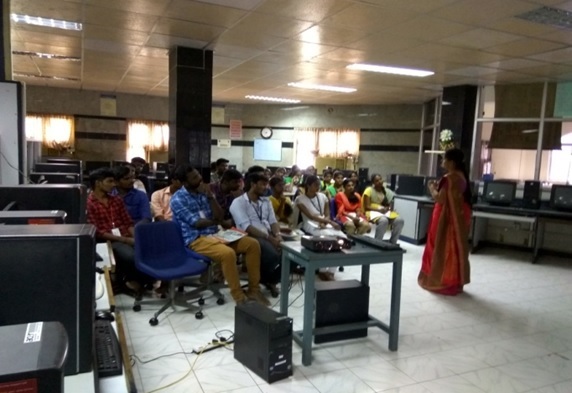
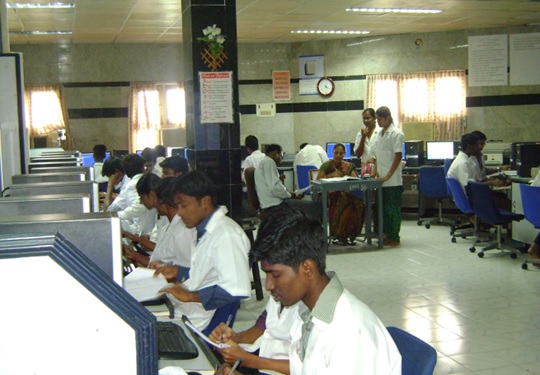
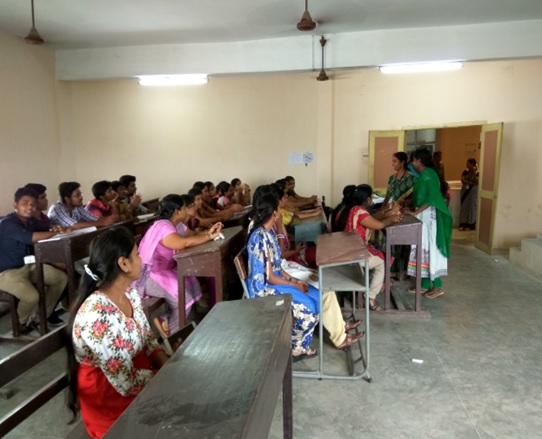
IT department was started in the year July 2000 with massive computing facilities and outstanding classrooms with an excellent work-study environment open to students and faculties. The teaching – learning is facilitated with sufficient class rooms and library.
The Department Library occupies a unique place in academic activities of the department. It is perhaps the most important central facility provided by the Institute. The Library maintains an excellent collection of 556 data books and other documents/materials.
| Lab Name | Systems Configuration | No of Systems |
| IT Lab CL -IV | IBM Think Center Intel Pentium 4 @2.6 Ghz Intel 865 GV Chipset Motherboard 128 MB DDC RAM 1.44 MB FDD 40 GB 7200 rpm HDD IBM Small Mouse and Keyboard 10/100 Mbps Ethernet Card IDM 15’’ Inch Color Monitor | 50 |
Faculty
| S.No | Name | Designation | Qualification |
| 1 | Dr.A.MATHANGOPI | ASSOCIATE PROFESSOR | B.E(CSE)., M.E(CSE)., Ph.D |
| 2 | Mr. A.G. IGNATIUS | ASST PROFESSOR | B.Tech(IT) ., M.E(CSE) |
| 3 | Mrs. R.MAGESWARI | ASST PROFESSOR | B.E(CSE)., M.E(CSE) |
| 4 | Mrs.T.AMALA | ASST PROFESSOR | B.E(CSE)., M.E(CSE) |
| 5 | Mrs.B.GEETHA | ASST PROFESSOR | B.E(CSE)., M.E(CSE) |
| 6 | Mr.INDIRAJITH | ASST PROFESSOR | B.E(CSE)., M.E(CSE) |
| 7 | Mrs. P. NIRMALA | ASST PROFESSOR | B.E(CSE)., M.E(CSE) |
| 8 | Mr.PRABUKUMAR | ASST PROFESSOR | B.E(CSE)., M.E(CSE) |
Advisory Committee
| Department Advisory Committee Members | Designation | Committee Members |
| Mrs.S.Dhanalakshmi | HOD (IC) | Convener |
| Mr.A.G.Ignatius | AP | Member |
| Mrs. K.Santhi Ponraj | AP | Member |
| Mrs. R. Mageswari | AP | Member |
| Mr.N.Senthil Kumar | AP | Member |
PSO’s, PO, POS, COs
PROGRAM EDUCATIONAL OBJECTIVES (PEOs)
PEO 1: Demonstrate technical competence with analytical and critical thinking to understand and meet the diversified requirements of industry, academia and research.
PEO 2: Exhibit technical leadership, team skills and entrepreneurship skills to provide business solutions to real world problems.
PEO 3: Work in multi-disciplinary industries with social and environmental responsibility, work ethics and adaptability to address complex engineering and social problems
PEO 4: Pursue lifelong learning, use cutting edge technologies and involve in applied research to design optimal solutions
PROGRAM OUTCOMES (POs)
PO1: Engineering knowledge: Apply the knowledge of mathematics, science, engineering fundamentals, and an engineering specialization to the solution of complex engineering problems.
PO2: Problem analysis: Identify, formulate, review research literature, and analyze complex engineering problems reaching substantiated conclusions using first principles of mathematics, natural sciences, and engineering sciences.
PO3: Design/development of solutions: Design solutions for complex engineering problems and design system components or processes that meet the specified needs with appropriate consideration for the public health and safety, and the cultural, societal, and environmental considerations.
PO4: Conduct investigations of complex problems: Use research-based knowledge and research methods including design of experiments, analysis and interpretation of data, and synthesis of the information to provide valid conclusions.
PO5: Modern tool usage: Create, select, and apply appropriate techniques, resources, and modern engineering and IT tools including prediction and modeling to complex engineering activities with an understanding of the limitations.
PO6: The engineer and society: Apply reasoning informed by the contextual knowledge to assess societal, health, safety, legal and cultural issues and the consequent responsibilities relevant to the professional engineering practice.
PO7: Environment and sustainability: Understand the impact of the professional engineering solutions in societal and environmental contexts, and demonstrate the knowledge of, and need for sustainable development.
PO8: Ethics: Apply ethical principles and commit to professional ethics and responsibilities and norms of the engineering practice.
PO9: Individual and team work: Function effectively as an individual, and as a member or leader in diverse teams, and in multidisciplinary settings.
PO10: Communication: Communicate effectively on complex engineering activities with the engineering community and with society at large, such as, being able to comprehend and write effective reports and design documentation, make effective presentations, and give and receive clear instructions.
PO11: Project management and finance: Demonstrate knowledge and understanding of the engineering and management principles and apply these to one’s own work, as a member and leader in a team, to manage projects and in multidisciplinary environments.
PO 12: Life-long learning: Recognize the need for, and have the preparation and ability to engage in independent and life-long learning in the broadest context of technological change.
PROGRAM SPECIFIC OUTCOMES(PSOs)
PSO1: Exhibit design and programming skills to build and automate business solutions using cutting edge technologies
PSO2: Strong theoretical foundation leading to excellence and excitement towards research, to provide elegant solutions to complex problems.
PSO3: Work effectively with various engineering fields as a team to design, build and develop system applications
SEMSETER -I
Contribution 1: Reasonable 2: Significant 3: Strong
C101 – Professional English I (HS3152)
| C101.1 | To use appropriate words in a professional context |
| C101.2 | To gain understanding of basic grammatic structures and use them in right context. |
| C101.3 | To read and infer the denotative and connotative meanings of technical texts |
| C101.4 | To write definitions, descriptions, narrations and essays on various topics |
C102- Matrices and Calculus (MA3151)
| C102.1 | Use the matrix algebra methods for solving practical problems. |
| C102.2 | Apply differential calculus tools in solving various application problems. |
| C102.3 | Able to use differential calculus ideas on several variable functions. |
| C102.4 | Apply different methods of integration in solving practical problems. |
| C102.5 | Apply multiple integral ideas in solving areas, volumes and other practical problems. |
C103 – Engineering Physics (PH3151)
| C103.1 | Understand the importance of mechanics. |
| C103.2 | Express their knowledge in electromagnetic waves. |
| C103.3 | Demonstrate a strong foundational knowledge in oscillations, optics and lasers. |
| C103.4 | Understand the importance of quantum physics. |
| C103.5 | Comprehend and apply quantum mechanical principles towards the formation of energy bands |
C104-Engieering Chemistry (CY3151)
| C104.1 | To infer the quality of water from quality parameter data and propose suitable treatment methodologies to treat water. |
| C104.2 | To identify and apply basic concepts of nanoscience and nanotechnology in designing the synthesis of nanomaterials for engineering and technology applications. |
| C104.3 | To apply the knowledge of phase rule and composites for material selection requirements. |
| C104.4 | To recommend suitable fuels for engineering processes and applications. |
| C104.5 | To recognize different forms of energy resources and apply them for suitable applications in energy sectors. |
C105- Problem Solving and Python Programming (GE3151)
| C105.1 | Develop algorithmic solutions to simple computational problems. |
| C105.2 | Develop and execute simple Python programs. |
| C105.3 | Write simple Python programs using conditionals and loops for solving problems. |
| C105.4 | Decompose a Python program into functions. |
| C105.5 | Represent compound data using Python lists, tuples, dictionaries etc. |
| C105.6 | Read and write data from/to files in Python programs. |
C106- Heritage of Tamils (GE3152)
| C106.1 | Gain a deep knowledge of the political, social, and economic history of the Tamil people, from ancient Tamil kingdoms to modern-day Tamil Nadu and the Tamil diaspora. |
| C106.2 | Develop an understanding of the distinctive features of Tamil art forms, temple architecture, music, and dance, and their role in shaping Tamil identity. |
| C106.3 | Introduce to the richness of classical Tamil literature, such as the Sangam texts, and understand the evolution of the Tamil language over centuries. |
| C106.4 | Explore major Tamil religious practices, philosophies, and contributions to Hinduism, Jainism, Buddhism, and Christianity, highlighting their influence on Tamil culture and society. |
| C106.5 | Examine the historical and contemporary contributions of Tamil communities around the world, understanding their role in global trade, politics, and cultural exchange throughout history. |
C107 – Problem Solving and Python Programming Laboratory (GE3171)
| C107.1 | Develop algorithmic solutions to simple computational problems |
| C107.2 | Develop and execute simple Python programs. |
| C107.3 | Implement programs in Python using conditionals and loops for solving problems.. |
| C107.4 | Deploy functions to decompose a Python program. |
| C107.5 | Process compound data using Python data structures. |
| C107.6 | Utilize Python packages in developing software applications. |
C108- Physics and Chemistry Laboratory (BS3171)
Physics laboratory
| C108.1 | Understand the functioning of various physics laboratory equipment. |
| C108.2 | Use graphical models to analyse laboratory data. |
| C108.3 | Use mathematical models as a medium for quantitative reasoning and describing physical reality |
| C108.4 | Access, process and analyse scientific information. |
| C108.5 | Solve problems individually and collaboratively. |
Chemistry Laboratory
| C108.1 | To analyse the quality of water samples with respect to their acidity, alkalinity, hardness and DO. |
| C108.2 | To determine the amount of metal ions through volumetric and spectroscopic techniques |
| C108.3 | To analyse and determine the composition of alloys. |
| C108.4 | To learn simple method of synthesis of nanoparticles |
| C108.5 | To quantitatively analyse the impurities in solution by electroanalytical techniques |
C109 – English Laboratory (GE3172)
| C109.1 | To listen to and comprehend general as well as complex academic information |
| C109.2 | To listen to and understand different points of view in a discussion |
| C109.3 | To speak fluently and accurately in formal and informal communicative contexts |
| C109.4 | To describe products and processes and explain their uses and purposes clearly and accurately |
| C109.5 | To express their opinions effectively in both formal and informal discussions |
SEMESTER -II
C110 -Professional English II (HS3252)
| C110.1 | To compare and contrast products and ideas in technical texts. |
| C110.2 | To identify and report cause and effects in events, industrial processes through technical texts |
| C110.3 | To analyse problems in order to arrive at feasible solutions and communicate them in the written format. |
| C110.4 | To present their ideas and opinions in a planned and logical manner |
| C110.5 | To draft effective resumes in the context of job search. |
C111 – Statistics and Numerical Methods (MA3251)
| C111.1 | Apply the concept of testing of hypothesis for small and large samples in real life problems. |
| C111.2 | Apply the basic concepts of classifications of design of experiments in the field of agriculture. |
| C111.3 | Appreciate the numerical techniques of interpolation in various intervals and apply the numerical techniques of differentiation and integration for engineering problems. |
| C111.4 | Understand the knowledge of various techniques and methods for solving first and second order ordinary differential equations. |
| C111.5 | Solve the partial and ordinary differential equations with initial and boundary conditions by using certain techniques with engineering applications. |
C112 – Physics for Information Science (PH3256)
| C112.1 | Gain knowledge on classical and quantum electron theories, and energy band structures |
| C112.2 | Acquire knowledge on basics of semiconductor physics and its applications in various devices |
| C112.3 | Get knowledge on magnetic properties of materials and their applications in data storage, |
| C112.4 | Have the necessary understanding on the functioning of optical materials for optoelectronics |
| C112.5 | Understand the basics of quantum structures and their applications and basics of quantum computing |
C113 – Basic Electric and Electronics Engineering (BE3251)
| C113.1 | Compute the electric circuit parameters for simple problems |
| C113.2 | Explain the working principle and applications of electrical machines |
| C113.3 | Analyze the characteristics of analog electronic devices |
| C113.4 | Explain the basic concepts of digital electronics |
| C113.5 | Explain the operating principles of measuring instruments |
C114 – Engineering Graphics (GE3251)
| C114.1 | Use BIS conventions and specifications for engineering drawing. |
| C114.2 | Construct the conic curves, involutes and cycloid. |
| C114.3 | Solve practical problems involving projection of lines. |
| C114.4 | Draw the orthographic, isometric and perspective projections of simple solids. |
| C114.5 | Draw the development of simple solids. |
C115 – Programming in C (CS3251)
| C115.1 | Demonstrate knowledge on C Programming constructs |
| C115.2 | Develop simple applications in C using basic constructs |
| C115.3 | Design and implement applications using arrays and strings |
| C115.4 | Develop and implement modular applications in C using functions. |
| C115.5 | Develop applications in C using structures and pointers. |
| C115.6 | Design applications using sequential and random access file processing. |
C116- Tamils and Technology (GE3252)
| C116.1 | Learn how technology has evolved in Tamil society, from ancient innovations in agriculture, architecture, and maritime trade to modern advancements in science and engineering. |
| C116.2 | Highlight contributions made by Tamil scholars, engineers, and scientists in fields like mathematics, medicine, and space research, emphasizing their global impact. |
| C116.3 | Explore how modern technology, such as software, AI, and digital platforms, plays a role in preserving and promoting Tamil language and literature in the digital era. |
| C116.4 | Examine how advancements in communication, media, and transportation have influenced Tamil culture, including cinema, music, and social practices in Tamil communities worldwide. |
| C116.5 | Introduced to emerging technologies, such as AI, machine learning, andblockchain, and their potential application in addressing challenges and opportunities specific to Tamil society, such as in education, agriculture, and governance. |
C117 – Engineering Practices Laboratory (GE3271)
| C117.1 | Draw pipe line plan; lay and connect various pipe fittings used in common household plumbing work; Saw; plan; make joints in wood materials used in common household wood work. |
| C117.2 | Wire various electrical joints in common household electrical wire work. 62 |
| C117.3 | Weld various joints in steel plates using arc welding work; Machine various simple processes like turning, drilling, tapping in parts; Assemble simple mechanical assembly of common household equipments; Make a tray out of metal sheet using sheet metal work. |
| C117.4 | Solder and test simple electronic circuits; Assemble and test simple electronic components on PCB. |
C118 – Programming in C Laboratory (CS3271)
| C118.1 | Demonstrate knowledge on C programming constructs. |
| C118.2 | Develop programs in C using basic constructs. |
| C118.3 | Develop programs in C using arrays. |
| C118.4 | Develop applications in C using strings, pointers, functions. |
| C118.5 | Develop applications in C using structures. |
| C118.6 | Develop applications in C using file processing. |
C119 – Communication Laboratory (GE3272)
| C119.1 | Speak effectively in group discussions held in a formal/semi formal contexts. |
| C119.2 | Discuss, analyse and present concepts and problems from various perspectives to arrive at suitable solutions |
| C119.3 | Write emails, letters and effective job applications. |
| C119.4 | Write critical reports to convey data and information with clarity and precision |
| C119.5 | Give appropriate instructions and recommendations for safe execution of tasks |
SEMESTER -III
C201 -Discrete Mathematics (MA3354)
| C201.1 | Have knowledge of the concepts needed to test the logic of a program. |
| C201.2 | Have an understanding in identifying structures on many levels. |
| C201.3 | Be aware of a class of functions which transform a finite set into another finite set which relates to input and output functions in computer science. |
| C201.4 | Be aware of the counting principles. |
| C201.5 | Be exposed to concepts and properties of algebraic structures such as groups, rings and fields. |
C202 – Digital Principles and Computer Organization (CS3351)
| C202.1 | Design various combinational digital circuits using logic gates |
| C202.2 | Design sequential circuits and analyze the design procedures |
| C202.3 | State the fundamentals of computer systems and analyze the execution of an instruction |
| C202.4 | Analyze different types of control design and identify hazards |
| C202.5 | Identify the characteristics of various memory systems and I/O communication |
C203 – Foundations of Data Science (CS3352)
| C203.1 | Define the data science process |
| C203.2 | Understand different types of data description for data science process |
| C203.3 | Gain knowledge on relationships between data |
| C203.4 | Use the Python Libraries for Data Wrangling |
| C203.5 | Apply visualization Libraries in Python to interpret and explore data |
C204 -Data Structures and Algorithms (CD3291)
| C204.1 | Explain abstract data types |
| C204.2 | Design, implement, and analyze linear data structures, such as lists, queues, and stacks, according to the needs of different applications |
| C204.3 | Design, implement, and analyze efficient tree structures to meet requirements such as searching, indexing, and sorting |
| C204.4 | Model problems as graph problems and implement efficient graph algorithms to solve them |
C205 – Object Oriented Programming (CS3391)
| C205.1 | Apply the concepts of classes and objects to solve simple problems |
| C205.2 | Develop programs using inheritance, packages and interfaces |
| C205.3 | Make use of exception handling mechanisms and multithreaded model to solve real world problems |
| C205.4 | Build Java applications with I/O packages, string classes, Collections and generics concepts |
| C205.5 | Integrate the concepts of event handling and JavaFX components and controls for developing GUI based applications |
C206-Data Structure and Algorithms Laboratory (CD3281)
| C206.1 | Implement ADTs as Python classes |
| C206.2 | Design, implement, and analyse linear data structures, such as lists, queues, and stacks, according to the needs of different applications |
| C206.3 | Design, implement, and analyse efficient tree structures to meet requirements such as searching, indexing, and sorting |
| C206.4 | Model problems as graph problems and implement efficient graph algorithms to solve them |
C207 – Object Oriented Programming Laboratory (CS3381)
| C205.1 | Design and develop java programs using object oriented programming concepts |
| C205.2 | Develop simple applications using object oriented concepts such as package, exceptions |
| C205.3 | Implement multithreading, and generics concepts |
| C205.4 | Create GUIs and event driven programming applications for real world problems |
| C205.5 | Implement and deploy web applications using Java |
C208 – Data Science Laboratory (CS3361)
| C208.1 | Make use of the python libraries for data science |
| C208.2 | Make use of the basic Statistical and Probability measures for data science. |
| C208.3 | Perform descriptive analytics on the benchmark data sets. |
| C208.4 | Perform correlation and regression analytics on standard data sets |
| C208.5 | Present and interpret data using visualization packages in Python. |
C209 – Professional Development (GE3361)
| C209.1 | Use MS Word to create quality documents, by structuring and organizing content for their day to day technical and academic requirements |
| C209.2 | Use MS EXCEL to perform data operations and analytics, record, retrieve data as per requirements and visualize data for ease of understanding |
| C209.3 | Use MS PowerPoint to create high quality academic presentations by including common tables, charts, graphs, interlinking other elements, and using media objects. |
SEMESTER -IV
C210 – Theory of Computation (CS3452)
| C210.1 | Construct automata theory using Finite Automata |
| C210.2 | Write regular expressions for any pattern |
| C210.3 | Design context free grammar and Pushdown Automata |
| C210.4 | Design Turing machine for computational functions |
| C210.5 | Differentiate between decidable and undecidable problems |
C211 – Artificial Intelligence and Machine Learning (CS3491)
| C211.1 | Use appropriate search algorithms for problem solving |
| C211.2 | Apply reasoning under uncertainty |
| C211.3 | Build supervised learning models |
| C211.4 | Build ensembling and unsupervised models |
| C211.5 | Build deep learning neural network models |
C212 – Database Management Systems (CS3492)
| C212.1 | Construct SQL Queries using relational algebra |
| C212.2 | Design database using ER model and normalize the database |
| C212.3 | Construct queries to handle transaction processing and maintain consistency of the database |
| C212.4 | Compare and contrast various indexing strategies and apply the knowledge to tune the performance of the database |
| C212.5 | Appraise how advanced databases differ from Relational Databases and find a suitable database for the given requirement. |
C213 – Web Essentials (IT3401)
| C213.1 | Apply JavaScript, HTML and CSS effectively to create interactive and dynamic websites. |
| C213.2 | Create simple PHP scripts |
| C213.3 | Design and deploy simple web-applications. |
| C213.4 | Create simple database applications. |
| C213.5 | Handle multimedia components |
C214 – Introduction to Operating Systems (CS3451)
| C214.1 | Analyze various scheduling algorithms and process synchronization. |
| C214.2 | Explain deadlock prevention and avoidance algorithms. |
| C214.3 | Compare and contrast various memory management schemes. |
| C214.4 | Explain the functionality of file systems, I/O systems, and Virtualization |
| C214.5 | Compare iOS and Android Operating Systems. |
C215 – Environmental Science and Sustainability (GE3451)
| C215.1 | To recognize and understand the functions of environment, ecosystems and biodiversity and their conservation. |
| C215.2 | To identify the causes, effects of environmental pollution and natural disasters and contribute to the preventive measures in the society. |
| C215.3 | To identify and apply the understanding of renewable and non-renewable resources and contribute to the sustainable measures to preserve them for future generations. |
| C215.4 | To recognize the different goals of sustainable development and apply them for suitable technological advancement and societal development. |
| C215.5 | To demonstrate the knowledge of sustainability practices and identify green materials, energy cycles and the role of sustainable urbanization |
C216 – Operating Systems Laboratory (CS3461)
| C216.1 | Define and implement UNIX Commands. |
| C216.2 | Compare the performance of various CPU Scheduling Algorithms. |
| C216.3 | Compare and contrast various Memory Allocation Methods. |
| C216.4 | Define File Organization and File Allocation Strategies. |
| C216.5 | Implement various Disk Scheduling Algorithms |
C217- Database Management Systems Laboratory (CS3481)
| C217.1 | Create databases with different types of key constraints. |
| C217.2 | Construct simple and complex SQL queries using DML and DCL commands. |
| C217.3 | Use advanced features such as stored procedures and triggers and incorporate in GUI based application development. |
| C217.4 | Create an XML database and validate with meta-data (XML schema). |
| C217.5 | Create and manipulate data using NOSQL database. |
SEMESTER V
C301 – Computer Networks (CS3591)
| C301.1 | Explain the basic layers and its functions in computer networks. |
| C301.2 | Understand the basics of how data flows from one node to another. |
| C301.3 | Analyze routing algorithms. |
| C301.4 | Describe protocols for various functions in the network. |
| C301.5 | Analyze the working of various application layer protocols. |
C302 – Full Stack Web Development (IT3501)
| C302.1 | Understand the various stacks available for web application development |
| C302.2 | Use Node.js for application development |
| C302.3 | Develop applications with MongoDB |
| C302.4 | Use the features of Angular and Express |
| C302.5 | Develop React applications |
C303 – Distributed Computing (CS3551)
| C303.1 | Explain the foundations of distributed systems (K2) |
| C303.2 | Solve synchronization and state consistency problems (K3) |
| C303.3 | Use resource sharing techniques in distributed systems (K3) |
| C303.4 | Apply working model of consensus and reliability of distributed systems (K3) |
| C303.5 | Explain the fundamentals of cloud computing (K2) |
C304 – Embedded Systems and IOT (CS3691)
| C304.1 | Explain the architecture of embedded processors. |
| C304.2 | Write embedded C programs. |
| C304.3 | Design simple embedded applications. |
| C304.4 | Compare the communication models in IOT |
| C304.5 | Design IoT applications using Arduino/Raspberry Pi /open platform. |
C305 – Neural Networks and Deep Learning (CCS355) –[Professional Elective -I]
| C305.1 | Apply Convolution Neural Network for image processing. |
| C305.2 | Understand the basics of associative memory and unsupervised learning networks. |
| C305.3 | Apply CNN and its variants for suitable applications. |
| C305.4 | Analyze the key computations underlying deep learning and use them to build and train deep neural networks for various tasks. |
| C305.5 | Apply autoencoders and generative models for suitable applications. |
C306 – Big Data Analytics (CCS334) –[Professional Elective -II]
| C306.1 | Describe big data and use cases from selected business domains. |
| C306.2 | Explain NoSQL big data management. |
| C306.3 | Install, configure, and run Hadoop and HDFS. |
| C306.4 | Perform map-reduce analytics using Hadoop. |
| C306.5 | Use Hadoop-related tools such as HBase, Cassandra, Pig, and Hive for big data analytics. |
C307 -Disaster Risk Reduction and Management (MX3084)-[Mandatory Course-I]
| C307.1 | To impart knowledge on the concepts of Disaster, Vulnerability and Disaster Risk reduction (DRR) |
| C307.2 | To enhance understanding on Hazards, Vulnerability and Disaster Risk Assessment prevention and risk reduction |
| C307.3 | To develop disaster response skills by adopting relevant tools and technology |
| C307.4 | Enhance awareness of institutional processes for Disaster response in the country |
| C307.5 | Develop rudimentary ability to respond to their surroundings with potential Disaster response in areas where they live, with due sensitivity |
C308 – Full Stack Web Development Laboratory (IT3511)
| C308.1 | Design full stack applications with clear understanding of user interface, business logic and data storage. |
| C308.2 | Design and develop user interface screens |
| C308.3 | Implement the functional requirements using appropriate tool |
| C308.4 | Design and develop database based on the requirements |
| C308.5 | Integrate all the necessary components of the application |
SEMESTER -VI
C309 – Object Oriented Software Engineering (CCS356)
| C309.1 | Compare various Software Development Lifecycle Models |
| C309.2 | Evaluate project management approaches as well as cost and schedule estimation strategies |
| C309.3 | Perform formal analysis on specifications. |
| C309.4 | Use UML diagrams for analysis and design. |
| C309.5 | Architect and design using architectural styles and design patterns, and test the system |
C310 – Cloud Computing (CCS335)-[Professional Elective-III]
| C310.1 | Understand the design challenges in the cloud. |
| C310.2 | Apply the concept of virtualization and its types. |
| C310.3 | Experiment with virtualization of hardware resources and Docker. |
| C310.4 | Develop and deploy services on the cloud and set up a cloud environment. |
| C310.5 | Explain security challenges in the cloud environment. |
C311 – Digital Marketing (CCW332)=[ Professional Elective-IV]
| C311.1 | To examine and explore the role and importance of digital marketing in today’s rapidly changing business environment |
| C311.2 | To focuses on how digital marketing can be utilized by organizations and how its effectiveness can be measured. |
| C311.3 | To know the key elements of a digital marketing strategy. |
| C311.4 | To study how the effectiveness of a digital marketing campaign can be measured |
| C311.5 | To demonstrate advanced practical skills in common digital marketing tools such as SEO, SEM, Social media and Blogs |
C312 – Network Security (CCS354)[ Professional Elective-V]
| C312.1 | Classify the encryption techniques |
| C312.2 | Illustrate the key management technique and authentication. |
| C312.3 | Evaluate the security techniques applied to network and transport layer |
| C312.4 | Discuss the application layer security standards. |
| C312.5 | Apply security practices for real time applications |
C313 – Soft Computing (CCS364)-[ Professional Elective-VI]
| C313.1 | Understand the fundamentals of fuzzy logic operators and inference mechanisms |
| C313.2 | Understand neural network architecture for AI applications such as classification and clustering |
| C313.3 | Learn the functionality of Genetic Algorithms in Optimization problems |
| C313.4 | Use hybrid techniques involving Neural networks and Fuzzy logic |
| C313.5 | Apply soft computing techniques in real world applications |
C314 – Industrial Safety (MX3089)-[Mandatory Course -II]
| C314.1 | Understand the basic concept of safety. |
| C314.2 | Obtain knowledge of Statutory Regulations and standards. |
| C314.3 | Know about the safety Activities of the Working Place. |
| C314.4 | Analyze on the impact of Occupational Exposures and their Remedies |
| C314.5 | Obtain knowledge of Risk Assessment Techniques. |
C315- Mobile Application Development Laboratory (IT3681)
| C315.1 | Design and build simple mobile applications supporting multiple platforms. |
| C315.2 | Apply various programming techniques and patterns to build mobile applications. |
| C315.3 | Build real-time mobile applications for society/environment |
| C315.4 | Build gaming and multimedia based mobile applications |
| C315.5 | Build AI based mobile applications for society/environment following ethical practices |
SEMESTER VII
C401 – Human Values and Ethics (GE3791)
| C401.1 | Identify the importance of democratic, secular and scientific values in harmonious functioning of social life |
| C401.2 | Practice democratic and scientific values in both their personal and professional life. |
| C401.3 | Find rational solutions to social problems. |
| C401.4 | Behave in an ethical manner in society |
| C401.5 | Practice critical thinking and the pursuit of truth. |
C402-Principles of Management (GE3751)-[Elective -Management]
| C402.1 | Upon completion of the course, students will be able to have clear understanding of managerial functions like planning, organizing, staffing, leading & controlling. |
| C402.2 | Have same basic knowledge on international aspect of management. |
| C402.3 | Ability to understand management concept of organizing. |
| C402.4 | Ability to understand management concept of directing. |
| C402.5 | Ability to understand management concept of controlling. |
C403- IT in Agricultural System (AI3021) [Open Elective -II]
| C403.1 | The students shall be able to understand the applications of IT in remote sensing applications such as Drones etc. |
| C403.2 | The students will be able to get a clear understanding of how a greenhouse can be automated and its advantages. |
| C403.3 | The students will be able to apply IT principles and concepts for management of field operations. |
| C403.4 | The students will get an understanding about weather models, their inputs and applications. |
| C403.5 | The students will get an understanding of how IT can be used for e-governance in agriculture. |
C404-Multivariate Data Analysis (OMG355)-[Open Elective-IV]
| C404.1 | Demonstrate a sophisticated understanding of the concepts and methods; know the exact scopes and possible limitations of each method; and show capability of using multivariate techniques to provide constructive guidance in decision making. |
| C404.2 | Use advanced techniques to conduct thorough and insightful analysis, and interpret the results correctly with detailed and useful information. |
| C404.3 | Show substantial understanding of the real problems; conduct deep analysis using correct methods; and draw reasonable conclusions with sufficient explanation and elaboration. |
| C404.4 | Write an insightful and well-organized report for a real-world case study, including thoughtful and convincing details. |
| C404.5 | Make better business decisions by using advanced techniques in data analytics |
SEMESTER VIII
C405 – Project Work/Internship
| C405.1 | Gain Domain knowledge and technical skill set required for solving industry / research problems |
| C405.2 | Provide solution architecture, module level designs, algorithms |
| C405.3 | Implement, test and deploy the solution for the target platform |
| C405.4 | Prepare detailed technical report, demonstrate and present the work |
Information Technology
The Department of Information Technology has well-structured classrooms, a dedicated library, and a team of highly qualified and experienced faculty members.
The Department of Information Technology is equipped with high-performance i7 & i9 systems and a 150 Mbps broadband internet connected laboratory. The department houses various specialized laboratories such as the Programming Laboratory, Database Management Laboratory, Networking Laboratory, Cloud Computing Laboratory, and Web Technology Laboratory.
IT students regularly visit reputed companies for industrial visits such as Retech Solutions Pvt. Ltd., Doordarshan, Tek Meadows, and BSNL to gain valuable insights and practical exposure to industry operations. Students also undergo internships in leading MNCs every semester to enhance their technical and professional skills.
Graduates of Information Technology have a wide range of career opportunities as Software Developers, Web Developers, Network Engineers, System Analysts, Cybersecurity Experts, Database Administrators, and IT Consultants in top MNCs as well as in government sectors such as DRDO, ISRO, and NIC.
IT graduates of SMIT are able to:
Research
Funded Projects 2021-2022
| S.No | Name of the research project/ endowment | Name of the Principal Investigator/Co-investigator | Department of Principal Investigator | Year of Award | Amount Sanctioned | Duration of the project |
Name of the Funding Agency | Type (Government/non-Government)
|
| 1. | Cloud Assisted Mobile Access Of Health Data With Privacy And Auditability | Mrs.T.Saranya | Artificial Intelligence and Data Science | 2022 | 47,000 | 1 year | Phoneix Medical System | Non-Government |
| 2. | Policy Based Management on Cloud Using Encryption | Mr.G.SandraKarunya | Artificial Intelligence and Data Science | 2022 | 39,000 | 9 months | Trios Tehnologies PVT.LTD | Non-Government |
Funded Projects 2022-2023
| S.No | Name of the research project/ endowment | Name of the Principal Investigator/Co-investigator | Department of Principal Investigator | Year of Award | Amount Sanctioned | Duration of the project |
Name of the Funding Agency | Type (Government/non-Government)
|
| 1. | Li-Fi Based Smart-Path System For Closed Space Region | Mrs.G.Sandra Karunya | Artificial Intelligence and Data Science | 2022 | 36,000 | 1 year | RJP Infotek (P) Ltd. | Non-Government |
| 2. | Stuttered Speech Recognition using Raspberry-PI | Mrs.B.Mahalakshmi | Artificial Intelligence and Data Science | 2023 | 48,000 | 8 months | Fabsys Technologies Private Limited | Non-Government |
Association Activities
Achievements
FACULTY PUBLICATION
Mr.Shanmugavel participated in the fifteen days Faculty Development Programme conducted by Loyola Institute of Technology, Chennai under the topic “Wireless Sensor Networks”.
Mr.V.Pandarinathan has participated in the two days Faculty Development Programme conducted by Hindustan Institute of Technology and Science, Chennai under the topic “Introduction to Python Programming”.
G.Sandra Karunya participated in the fifteen days Faculty Development Programme conducted by Loyola Institute of Technology, Chennai under the topic “Wireless Sensor Networks”
Mrs.S.Kavitha participated in the five days Faculty Development Programme conducted by Rajalakshmi Engineering College, Chennai under the topic “Exploring Wearable Tech and AI Innovations for Personalized Healthcare”
Mrs.S.Kavitha participated in the six days Faculty Development Programme conducted by Jeppiar Institute of Technology under the topic “Emerging Technology in Artificial Intelligence”
Mrs.S.Kavitha participated in the five days Faculty Development Programme conducted by Sphoorthy Engineering College, Chennai under the topic “AI Insights: Predictive power of ML,DL & NLP”
Mrs.S.Kavitha participated in the five days Naan Mudhalvan Faculty Development Programme conducted by Anna University, Chennai under the topic CCNA -1
Mrs.S.Kavitha participated in the six days Faculty Development Programme conducted by AICTE Training and Learning (ATAL) Academy, New Delhi under the topic “ENHANCING CYBER THREAT DETECTION THROUGH INCORPORATING DIGITAL TECHNOLOGIES at VelTech Ranagarajan Dr.Sagunthala R&D Institute of Science and Technology.
Mrs. Harshika A V Participated in the International Seminar on “Data Science and Management of Data” by Dr. M.G.R. Educational and Research Institute, Chennai.
Mrs. Harshika A V Completed the Five-day Virtual Faculty Development Program on “Exploring Wearable Tech and AI Innovations for personalized Healthcare” by Rajalakshmi Engineering College.
Mrs. Harshika A V Took part in 6Days Physical Mode Faculty Empowerment Programme on “Neural Networks and Deep Learning (CCS355)” organized by Anna University, Ramanujan Computing Centre, Guindy.
Mrs. Harshika A V Completed the Six Days National Level FDP on “Next-Gen Educators: Harnessing the Power of Machine Learning” by Jeppiaar Institute of Technology.
Mrs. Harshika A V Took Part in AICTE Training and Learning (ATAL) Academy Six days Online FDP on “AI-Driven Solutions for Modern Cybersecurity Challenges” by Ramco Institute of Technology.
| S.No. | Name of the teacher | Title of the paper | Title of the Journal | National / International | ISBN/ISSN number of the proceeding | Year of publication | Affiliating Institute at the time of publication |
| 1 | Mr.D.Shanmugavel | PULSE RATE AND BLOOD OXYGEN MONITORING SYSTEM USING INTERNET OF THINGS | International Journal of All Research Education and Scientific methods | IJARESM | 2455-6211 | 09-05-22 | Sri Muthukumaran Institute of technology |
| 2 | Mr.D.Shanmugavel | IOT BASED MONITORING SYSTEM TO DETECT COVID-19 AND OTHER HEALTH ISSUES USING ARDUINO MICROCONTROLLER | International Journal of Advance Research, Ideas &Innovations in Technology | IJARIIT | 2454-132X,Volume 8, Issue 2-V812-1234 | 2022 | Sri Muthukumaran Institute of technology |
| 3 | Mr.D.Shanmugavel | A POSSIBILITY MISDEED NODE CATCHING SCHEME IN DELAY TOLERANT NETWORKS | International Journal of Advanced Information Science & Technology | IJAIST | 2319-2682,Volume 34, Issue 34, February-2015 | 2015 | Sri Muthukumaran Institute of technology |
| 4 | Mr.D.Shanmugavel | SECURE DATA TRANSFER IN AMBIENT AUDIO | International Journal of emerging technologies in engineering research | IJETER | Volume 4, Issue 4,February-2015 | 2015 | Sri Muthukumaran Institute of technology |
| 5 | Mr.D.Shanmugavel | PIXEL WISE ANALYSING MULTIPLE ORDERED FACE RECOGNITION USING RPSM | International Journal of Advanced Research in Management, Architecture, Technology and Engineering | IJARMATE | Volume 4, Special Issue 6, March 2016 | 2016 | Sri Muthukumaran Institute of technology |
| 6 | Mr.D.Shanmugavel | A PROPOSAL FOR EMERGENCY EVENT GOVERNANCE USING MULTIPLE SENSOR AND 3W MODEL | International Journal of Advanced Research in Management, Architecture, Technology and Engineering | IJARMATE | Volume 2, Special issue 6, March 2016 | 2016 | Sri Muthukumaran Institute of technology |
| 7 | Mrs.T.Saranya | Eatery Automation for wireless Menu dish requesting using Zigbee | International Journal of Research in Engineering, Science and Management | IJRESM | Volume 2, Issue 3, March 2019 | 2019 | Sri Muthukumaran Institute of technology |
| 8 | Mrs.G.Sandra Karunya | Eatery Automation for wireless Menu dish requesting using Zigbee | International Journal of Research in Engineering, Science and Management | IJRESM | Volume 2, Issue 3, March 2019 | 2019 | Sri Muthukumaran Institute of technology |
| 9 | Mrs.T.Saranya | Design and development of Semi-portable rehabilitation system for upper-limb disability | International Journal of Research in Engineering, Science and Management | IJRESM | Volume 2, Issue 3, March 2019 | 2019 | Sri Muthukumaran Institute of technology |
| 10 | Mrs.G.Sandra Karunya | IOT Enabled Assisting device for seizures monitoring | International Journal of Research in Engineering, Science and Management | IJRESM | Volume 2, Issue 3, March 2019 | 2019 | Sri Muthukumaran Institute of technology |
| 11 | Mrs.G.Sandra Karunya | A New Energy efficient & consumption based routing protocol for UWSNS | International Journal of Research in Engineering, Science and Management | IJRESM | Volume 2, Issue 3, March 2019 | 2019 | Sri Muthukumaran Institute of technology |
| International and National Conference | |||||||
| Sl. No. | Name of the teacher | Title of the paper | Title of the proceedings of the conference | Name of the conference | National / International | Year of publication | Affiliating Institute at the time of publication |
| 1 | Mr.D.SHANMUGAVEL | Surmising Assault Resistant E-Health care cloud frame work with fine grained access control | ICTACC’23 | International Conference on Technological Advancement in Computers and Communication | International | 2023 | Adhiparsakthi Engineering College |
| 2 | Mrs.T.SARANYA | Separation Of Changes Layoff And Employing Barring | ICTACC’23 | International Conference on Technological Advancement in Computers and Communication | International | 2023 | Adhiparsakthi Engineering College |
| 3 | Mrs.G.SANDRA KARUNYA | Classifying data with suggestive causes and flexible solutions | ICTACC’23 | International Conference on Technological Advancement in Computers and Communication | International | 2023 | Adhiparsakthi Engineering College |
| 4 | Mrs. B.MAHALAKSHMI | Pick and Place Robot Controlled by Speech Recognition using Fuzzy logic Method | NCREACT’19 | National Conference on Recent Enhancement in Advanced Computing Technologies | National | 2023 | RRASE College of Engineering |
| 5 | Mrs.K.GEERIYASAKTHI | Hybrid Drone with Panoramic Camera for Automatic fish Recognition Based on Deep Learning | NCREACT’19 | National Conference on Recent Enhancement in Advanced Computing Technologies | National | 2023 | RRASE College of Engineering |
| Sri Muthukumaran Institute of Technology- Faculty publications in conference | ||||||||
| Department ofAI&DS | ||||||||
| Sl. No. | Name of the teacher | Name of the proceeding | Title of the paper | Institution conducting the Conference | Name of the conference | National / international | Year of publication | Affiliating Institute at the time of publication |
| 1 | Mr.V.Pandarinathan | Conference | LIFI TRANSMITTER AND RECEIVER BASED TOLL AUTOMATION | RRASE college of Engineering | NCREACT’19 | National | Sep-19 | Sri Muthukumaran Institute of Technology |
| 2 | Mr.D.Shanmugavel | Conference | FAST DETECTION OF MOBILE REPLICA NODE ATTACKS IN WIRELESS SENSOR NETWORKS USING SPRT | National conference on Advanced computing technologies and applications | NCACTA’12 | National | Mar-12 | Sri Muthukumaran Institute of Technology |
| 3 | Mr.D.Shanmugavel | Conference | EFFICIENT SEARCH IN UNSTRUCTURED PEER TO PEER NETWORK BY DYNAMIC SEARCH ALGORITHM | National conference on Advanced computing technologies and applications | NCACTA’10 | National | 20th March 2010 | Sri Muthukumaran Institute of Technology |
| 4 | Mr.D.Shanmugavel | Conference | ENERGETIC PROCESSING FOR MESSAGE PASSING IN DISTRIBUTED APPROACH | International Conference on Innovative trends in computing and technology | ICITCT’13 | International | 7th and 8th March 2013 | Sri Muthukumaran Institute of Technology |
| 5 | Mr.D.Shanmugavel | Conference | EFFICIENT PROCESSING FOR MESSAGE TRANSFER WITH DISTRIBUTED APPROACH | National conference on Advances in computing technology | NCACT | National | 6th March 2013 | Sri Muthukumaran Institute of Technology |
| 6 | Mr.D.Shanmugavel | Conference | A POSSIBILITY FOR MISDEED NODE CATCHING PROCESS IN DELAY TOLERANT NETWORKS | National Conference on recent trends in Information Technology | NCRTIT’15 | National | 28th March 2015 | Sri Muthukumaran Institute of Technology |
| 7 | Mr.D.Shanmugavel | Conference | SECURE DATA PASSING IN AMBIENT AUDIO | Indian Conference on Intelligent system | ICIS’16 | National | 26th February 2016 | Sri Muthukumaran Institute of Technology |
| 8 | Mr.D.Shanmugavel | Conference | SELF SUFFICIENT RESERVOIR DIRECTORATE WITH CAPACITY-VELOCITY SENSING | National Conference on Technological Advancement in Computer and Communication | NCTACC’16 | National | 29th March 2016 | Sri Muthukumaran Institute of Technology |
| 9 | Mr.D.Shanmugavel | Conference | A PROPOSAL FOR EMERGENCY PROCESS MAINTANENCE USING MULTIPLE SENSOR AND 3W MODEL | International conference in Magna on emerging Engineering Trends | ICMEET’16 | International | 10th and 11th March 2016 | Sri Muthukumaran Institute of Technology |
| 10 | Mr.D.Shanmugavel | Conference | ENHANCEMENT OF PIXELS FOR MULTIPLE ORDERED FACE DETECTION USING RPSM | International conference in Magna on emerging Engineering Trends | ICMEET’16 | International | 11th and 11th March 2016 | Sri Muthukumaran Institute of Technology |
| 11 | Mrs.T.Saranya | Conference | EATERY AUTOMATION FOR WIRELESS MENU DISH REQUESTING ZIGBEE | Saveetha Engineering college | ICTCON’19 | International | 2019 | Sri Muthukumaran Institute of Technology |
| 12 | Mrs.T.Saranya | Conference | RESTAURANT AUTOMATION FOR WIRELESS MENU DISH ORDERING USING ZIGBEE | Rrase College of Engineering | NCREACT’19 | National | 2019 | Sri Muthukumaran Institute of Technology |
| 13 | Mrs.G.Sandra karunya | Conference | VISUAL ASSISTANCE FOR BLIND USING IMAGE PROCESSING | Rrase College of Engineering | NCREACT’19 | National | 2019 | Sri Muthukumaran Institute of Technology |
| 14 | Mrs.T.Saranya | Conference | PREVENTION OF ACCIDENTS USING CONTROL SYSTEMS | Rrase College of Engineering | NCREACT’19 | National | 2019 | Sri Muthukumaran Institute of Technology |
| 15 | Mrs.T.Saranya | Conference | DETECTION OF COLLISION OF VEHICLES USING CONTROL SYSTEMS | Saveetha Engineering College | ICTCON’19 | International | 2019 | Sri Muthukumaran Institute of Technology |
| 16 | Mrs.T.Saranya | Conference | CONTROL OF ACCIDENTS USING EMBEDDED SYSTEMS | Dr.NGP Institute of Technology | NCETCII’19 | National | 2019 | Sri Muthukumaran Institute of Technology |
| 17 | Mrs.G.Sandra karunya | Conference | CHARACTER DETECTION AND RECOGNITION SYSTEM FOR VISUALLY IMPAIRED PEOPLE | RRASE college of Engineering | NCREACT’19 | National | 2019 | Sri Muthukumaran Institute of Technology |
| 18 | Mrs.G.Sandra karunya | Conference | UNDER GROUND WIRELESS SENSOR NETWORK AN ENERGY EFFICIENT AND BALANCED ENERGY CONSUMPTION BASED ON ROUTING PROTOCOL | Saveetha Engineering college | ICTCON’19 | International | 2019 | Sri Muthukumaran Institute of Technology |
| 19 | Mrs.G.Sandra karunya | Conference | A NEW ENERGY EFFICIENT AND CONSUMPTION BASED ROUTING PROTOCOL FOR UWSNS | RRASE college of Engineering | NCREACT’19 | National | 2019 | Sri Muthukumaran Institute of Technology |
| 20 | Mrs.G.Sandra karunya | Conference | IOT ENABLED ASSISTING DEVICE FOR SEIZURES MONITORING | RRASE college of Engineering | NCREACT’19 | National | 2019 | Sri Muthukumaran Institute of Technology |
| 21 | Mrs.G.Sandra karunya | Conference | AN INTELLIGENT ASSISTING DEVICE FOR PAROXYSM MONITORING | Saveetha Engineering college | ICTCON’19 | International | 2019 | Sri Muthukumaran Institute of Technology |
| 22 | Mr.V.Pandarinathan | Conference | HUMAN ACTION IDENTIFICATION USING SENSOR INFORMATION IN SMART HOMES | RRASE college of Engineering | NCREACT’19 | National | 2019 | Sri Muthukumaran Institute of Technology |
| 23 | Mr.V.Pandarinathan | Conference | SECURE ENERGY PRODUCTIVE COMPUTERIZED PUBLIC TRANSPORTING SYSTEM | RRASE college of Engineering | NCREACT’19 | National | 2019 | Sri Muthukumaran Institute of Technology |
| 24 | Mr.V.Pandarinathan | Conference | SECURE ENERGY EFFICIENT COMPUTERIZED PUBLIC TRANSPORT TICKETING SYSTEM | Saveetha Engineering college | ICTCON’19 | International | 2019 | Sri Muthukumaran Institute of Technology |
in education and research.

SMIT has been granted Autonomous status by the University Grants Commission (UGC). SMIT is accredited by National Assessment and Accreditation Council (NAAC) with ‘A’ Grade in the year 2024.